
Struggling With Your Birl? It May Be Time to Retrain It

The birl is one of the key embellishments in bagpiping, but it’s also one that a lot of pipers struggle with—even after years of playing.
I struggled with mine for a long time.
What finally helped me wasn’t finding a new trick for playing a birl. It was realizing that I needed to retrain the movement I had already been taught years earlier.
The Problem May Go Back to When You First Learned
Think about when you learned your birl.
For most of us, it was relatively early in our piping. At that point, our fingers and hands were still fairly new to the instrument. We were trying to learn a huge number of movements, embellishments, tunes, and finger positions all at once.
Eventually, the birl became automatic.
And that's normally a good thing. We want our embellishments to become automatic so we don't have to consciously think through every movement while we're playing.
But what if the movement you automated wasn't particularly efficient?
After thousands and thousands of repetitions, you've become very good at doing the birl exactly the way you originally taught your hand to do it.
That's why simply practicing more birls doesn't necessarily fix the problem.
Sometimes you have to retrain the automation.

What Changed My Birl
Years ago, someone gave me a piece of advice that completely changed how I approached my birl:
Keep the B finger steady and stable.
Don't let it move to help the birl.
The other thing I worked on was eliminating unnecessary movement from my wrist. I wanted the birl to come from my pinky rather than using my hand or wrist to help force the movement.
That sounds simple, but if you've played another way for years, it isn't simple at all.
Your hand already knows what it wants to do.
So I started breaking the movement down and retraining it slowly and repetitively.
Don't Just Learn a Birl—Learn It From Every Note
This became one of the biggest lessons for me.
Everybody learns a birl.
But I think you need to learn the birl from every note on the scale.
The movement into a birl is different depending on where your fingers are immediately before it. If you've only practiced the birl itself, you haven't necessarily trained your hand to execute it cleanly from all of the different positions you'll encounter in actual music.
So I began devising exercises where I played birls slowly and repeatedly from every note on the scale.
Start on one note.
Play the transition into the birl.
Stop.
Reset your hand.
Do it again.
Don't worry about speed. You're trying to teach your fingers a new movement pattern.
Once that becomes comfortable, move to another note and repeat the process.
The goal is to make the correct movement automatic from every finger position, not just when you're sitting there thinking, "I'm going to play a birl."
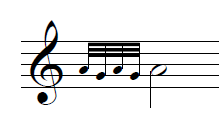
Isolate the Pinky
One of the biggest things I look for is unnecessary movement.
Watch your B finger. Watch your hand. Watch your wrist.
Are they helping?
If they are, slow everything down.
The more you can isolate the pinky and make it responsible for the birl, the easier and more dependable the movement can become.
This isn't about holding your entire hand rigid. It's about developing enough independence and control in the pinky that the rest of your hand doesn't need to compensate for it.
And that takes time.
If you've been playing for 10, 20, or 30 years, you're trying to overwrite thousands of repetitions of an old movement. Don't expect that to happen in a weekend.
Learn Every Style of Birl
I also think it's valuable to learn and practice the different styles of birl rather than relying exclusively on the one that feels easiest to you.
Why?
Because you're developing your pinky.
Different birl movements ask slightly different things from that finger. Working on all of them helps develop the muscles, coordination, independence, and adaptability of the pinky.
You may ultimately prefer one style in your playing, but practicing the others can still make your finger stronger and more capable.
Think of them as exercises as much as embellishments.
Slow It Down
If you're trying to retrain your birl, speed is not your friend in the beginning.
Use a metronome and slow the movement down far enough that you can control exactly what your fingers are doing.
Pay attention to the B finger.
Pay attention to your wrist.
Pay attention to whether you're introducing extra movement as you increase the tempo.
Once the movement is clean and repeatable, gradually increase the speed. If the old movement starts creeping back in, slow it down again.
You're not practicing how fast you can play a birl.
You're practicing the movement you want your hand to automatically choose when you aren't thinking about it.
That's an important distinction.
You're teaching an experienced hand a better way to play one.
Happy Piping!


Comments